The Technology Behind AgriPhoton's Greenhouse Light Coating

AgriPhoton uses semiconductor-based photonic materials to change how sunlight enters a greenhouse. The coating converts underused high-energy light into wavelengths plants use, and spreads that light more evenly through the crop.
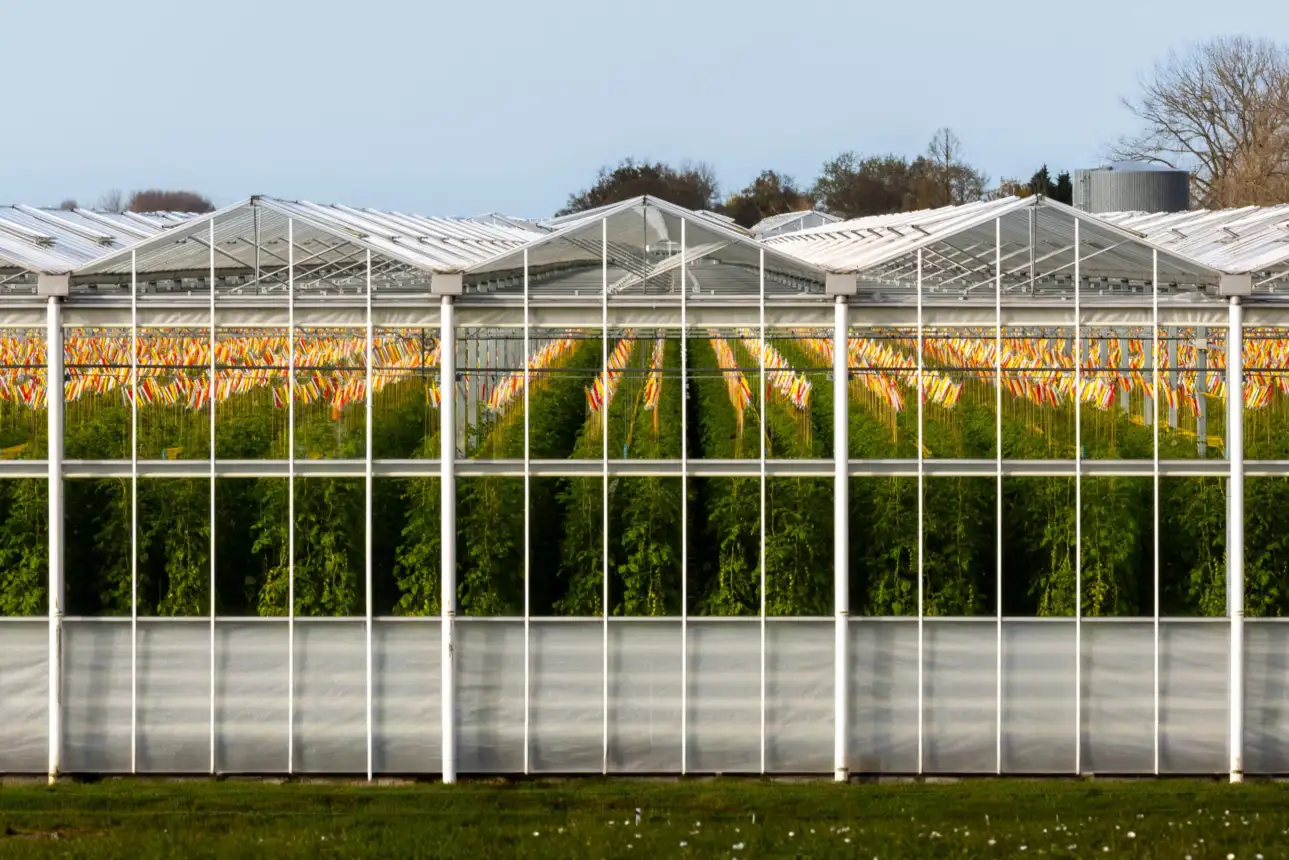
Rows of crops growing inside a large glass greenhouse under a blue sky.

The short version

Plants use light between 400 and 700 nanometres. This is called photosynthetically active radiation (PAR). Sunlight also contains high-energy wavelengths that plants use poorly and that add heat stress. AgriPhoton coats the greenhouse cover so more of the light reaching the crop is usable and less is wasted or harmful.

Three effects of the coating

Spectrum conversion

Semiconductor-based photonic materials absorb unused high-energy solar radiation and re-emit it as plant-usable light.

Better light distribution.

Redistributing usable wavelengths helps light reach more of the crop, not just the top leaves.

Heat management.

Reducing excess high-energy light helps regulate heat, which eases plant stress and the need for shading and cooling.

Why light distribution matters

Greenhouse researchers describe a rule of thumb: 1% more light gives about 1% more yield. Wageningen University & Research (WUR) also reported that, in earlier experiments, 10% more diffuse light meant about 1.5% more production. Even light reaches leaves deeper in the canopy, where shadows would otherwise limit growth.

AgriPhoton combines better light distribution with spectrum conversion, so the crop gets both more even light and more usable light.

Passive and safe by design

AgriPhoton is a passive coating. It does not emit radiation, use electricity or need active controls. Once applied, it stays stable on the cover and does not interfere with daily operations.

Key terms

Term Meaning
PARLight between 400 and 700 nm that plants use for photosynthesis
DLIDaily light integral: the total PAR a crop receives in a day
HazeHow much a cover scatters light; higher haze means more diffuse light
Spectrum conversionChanging unused wavelengths of sunlight into usable ones
More definitions are in the resources hub.

Evidence and validation

AgriPhoton’s performance figures are company-reported from trials. See results for ranges and conditions.

To compare the coating with shading paint, diffuse glass, film and screens, read the comparison guide
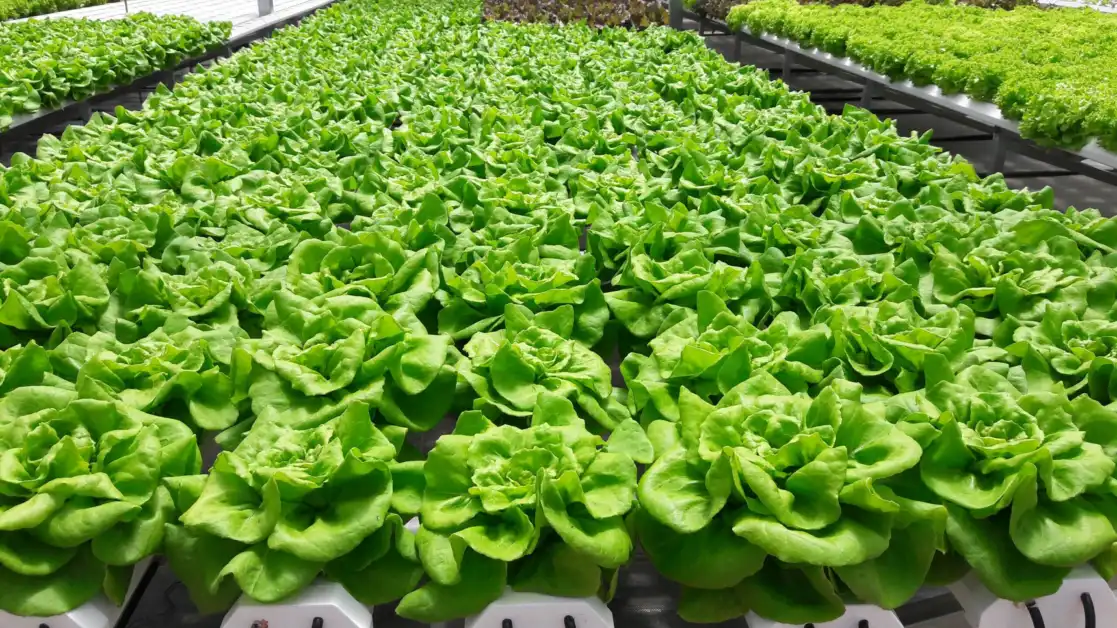
Rows of fresh leafy green lettuce growing in a greenhouse.

Frequently Asked Questions

How does spectrum conversion work in a greenhouse coating?
The coating contains photonic materials that absorb high-energy sunlight plants cannot use well. It re-emits that energy as light plants can use, and it reduces excess high-energy light entering the structure. The result is better light quality inside, without added energy or equipment.
Shading paint cools a greenhouse by blocking light. AgriPhoton manages light more selectively. It reduces heat stress while still letting productive light reach plants, so you get climate control without sacrificing yield.
PAR is photosynthetically active radiation, the 400 to 700 nm light that drives photosynthesis. More usable PAR, evenly distributed through the canopy, supports faster growth and higher yield.
No. AgriPhoton is passive and non-electrical. It does not emit radiation or require active controls.
Yes. AgriPhoton is especially effective in regions with high solar intensity, where managing excess heat and light is critical.

Ready to Test AgriPhoton on Your Greenhouse?

Start a pilot and measure the results on your own crop. We assess your greenhouse, apply the coating and review the results with you. No retrofit, no downtime.
Copyright © 2026 All Rights Reserved.